Selected works›Science Illustrated Explainer
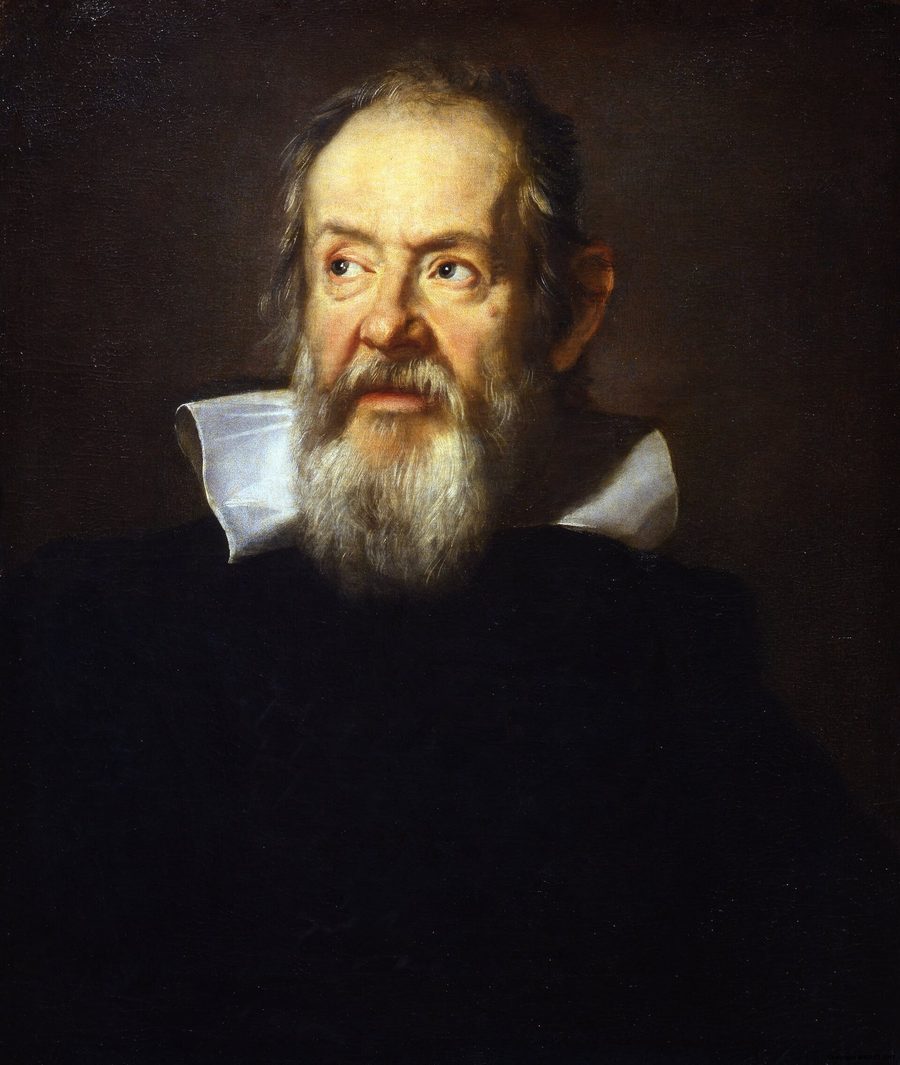
What Happens to Ultra Smart Kids When They Grow Up? (Profile of Galileo Galilei)
What was the most world-changing thought YOU ever had in church during a boring sermon?
Short answer: What happens to ultra smart kids? They change the world. Long answer: Many people think they are “ultra smart”. Some people even exhibit extreme intelligence: they learn lots of languages when they are children, they complete undergraduate degrees and even doctorates in their teens. Some become stock market billionaires, others get lost in academia, some seem to amount to nothing out of the ordinary at all.
These people are smart. They are not ultra smart.
You know who was ultra smart? Galileo Galilei. How ultra smart? Put it this way: when we were at uni, sitting in a boring Communication Ethics tute, watching a light fitting swing back and forth, we were thinking: “I am so bored. This lecture is crap.”
When Galileo sat in church watching a chandelier swing back and forth overhead he thought: “My God. The Earth goes around the Sun!”
A Lateral Mind
Okay the process had a few more steps than that – but this is just one example of the (literally) incredible way Galileo’s mind worked, and how this made him not merely super, or mega, but ULTRA smart.
With the chandeliers thing, Galileo was actually doing medicine at the University of Pisa at the time, and he noticed that the chandeliers swung back and forth at the same pace, no matter how big the arc (that is, a wildly swinging chandelier might take seven seconds to do a full swing, but so did a barely-moving chandelier).
He rushed home and set up some pendulums of equal length, and noted their behaviour. This was in 1581, a full 75 years before Dutch mathematician Christiaan Huygens used pendulums to create accurate clocks. In 1581, Galileo was just 17.
Galileo then accidentally attended a geometry lecture, changed his major to maths – which in the 1580s was about as radical as changing to Interpretive Dance, in that he had to get his dad’s permission – invented and got mildly famous for designing a new kind of hydrostatic balance (an extremely accurate scale), got super-good at the lute, became an instructor at a prestigious art academy in Florence, and was appointed Chair of Mathematics at the University of Pisa.
National-grade lutenist. Moderately famous inventor. Institutional art expert in chiaroscuro and perspective. Head of the school of mathematics in Pisa. 1589.
Twenty-five years old.
A Renaissance Man
Between the ages of 28 and 46, Galileo moved to Padua and lectured in geometry, mechanics, and astronomy, all while making fundamental scientific discoveries, including the kinematics of motion.
He also invented an early thermometer and a new kind of military compass for gunners, which probably saved a lot of lives on whichever complicated city-state alliance Galileo was part of at the time.
Oh and he also built a much better version of some tube thing. You know the thing. Looky-tube. Long-see-looky tube.
He rounded off this period of his life by discovering the four biggest moons of Jupiter, and making some really wrong descriptions of Saturn and its “two side-by-side moons” because the piece of junk 15mm telescope he threw together from scratch couldn’t resolve the rings.
Another of Galileo’s leaps of intuition occurred when he looked at the Moon through his telescope, and realised the “scalloped edge” along the shadowed side was actually a mountain range sticking out at him.
How did he know the shapes were mountains? Because he was so good at drawing chiaroscuro, which is all about light and shadow. Unlike most other early astronomers, Galileo’s artistic mind could imagine how he’d draw a grey mountain half-lost in black shadow pointing straight up at him. See, art is relevant!
Not Right, But Right Enough
Because no one is perfect, Galileo then spent some time insisting the tides were caused by the ocean sloshing back and forth as the Earth spun and orbited the sun.
He made this error because he was trying to prove that the Earth orbited the sun – which of course it does.
And this just goes to show that just because a scientist interprets a bunch of data incorrectly, it doesn’t mean his basic premise is wrong… (hem hem, climate change).
During his 50s Galileo published a bunch of books and became the leading philosophical representative of Mathematics. Not the department of mathematics at some proto-Italian university, ALL Mathematics. All of it. During the 1620s, he WAS Maths.
He also caught a glimpse of a compound microscope at an exhibition in Rome in 1624 and built a much improved version, probably while simultaneously busting out some really awesome licks on the lute.
Galileo did not invent the first microscope but he was certainly an alum of the institution (the Accademia dei Lincei – go Lynxes!) that coined the names “telescope” and “microscope”. Since this was all Greek to everyone else, the names stuck.
In 1623, Galileo published The Assayer, a neat little book that was well-received at the time and is today recognised as nothing less than one of the pioneering works of the scientific method.
That Thing With the Pope
Since by this point, doing anything else probably seemed trivially easy, Galileo decided to round out the final phase of his incredible life of scientific discovery. How? By taking on the entire human race and its belief that the Sun went around the Earth.
Initially, Galileo had papal approval to publish Dialogue Concerning the Two Chief World Systems, which was his case for Copernicus’ theory of heliocentrism, which we now know to be correct. Because Pope Urban VIII had just been elected and, some historians believe, was trying to show that the Vatican was down with all this new science stuff, and talking about weird things like the sun being the centre of the universe maybe didn’t need to be responded to with torture and burning. Necessarily.
The only rule (well, not the only rule, but the most important rule) was that Galileo wasn’t allowed to claim that heliocentrism was definitely real, he had to say it was just a theory.
At first everything was cool, but after the Inquisition’s book club finished reading it, things very quickly became not very cool at all.
Galileo was accused of disobeying a direct Papal injunction – the Inquisition reminded him that he’d received an official warning against promoting heliocentrism as early as 1616. In 1633, after what was probably a very shouty trial, Galileo was found “vehemently suspect of heresy”.
Anyone else would probably have spent the rest of their lives in a dank cell, but this was Galileo Galilei. The Inquisition knew its limits. There’s burning Templars, there’s expelling Jews, and then there’s putting everyone’s favourite maths geek in the hole.
Also, as heresy goes, Galileo did play it pretty cool. He was, after all, still a devout Catholic. And by sticking to the science and not extending his theories to a wholesale denial of the Holy Trinity, the divinity of Christ, and the virginity of Mary, Galileo was never on the hook to the same extent as fellow cosmologist Giordano Bruno had been back in 1600. They burned him at the stake.
(Incidentally, the last person executed for heresy by the Spanish Inquisition was schoolteacher Cayetano Ripoll, in 1826, for teaching kids that maybe, given the evidence, God doesn’t answer prayers.)
Anyway, after what was no doubt a very intense evening of legal wrangling, Galileo’s sentence was commuted to house arrest the very next day – 23 June 1633.
He returned to his villa near Florence where he remained for the rest of his life. He went totally blind in 1638, and eventually died in 1642. In a world where scientists were as likely to be burned alive as they were to get tenure, Galileo had survived for 77 years.
And Another Thing
Galileo did all this, lived his whole life – made his discoveries and built his inventions, fought the entire Catholic Church, got threatened with physical torture by the actual Inquisition – all while supporting his family and running a bunch of complicated businesses.
He also had to deal with the, uh, social issues of fathering three kids out of wedlock, and paying for his sisters’ dowries.
And he had a brother who was a perpetually broke musician who kept asking him for money. His name, because the universe is hilarious, was Michelangelo.
So yeah. If you’re stuck on a flight to London sat next to a guy who says he got a PhD at age 18 and has invested in cryptocurrency, and he thinks he’s a supergenius gaming the system because he’s made a bit of money… you’re probably justified in telling him to get some perspective.
Galileo could teach him. Because Galileo lectured in perspective at the Accademia delle Arti del Disegno, in Florence.
Smart kid.
Back to the portfolio